
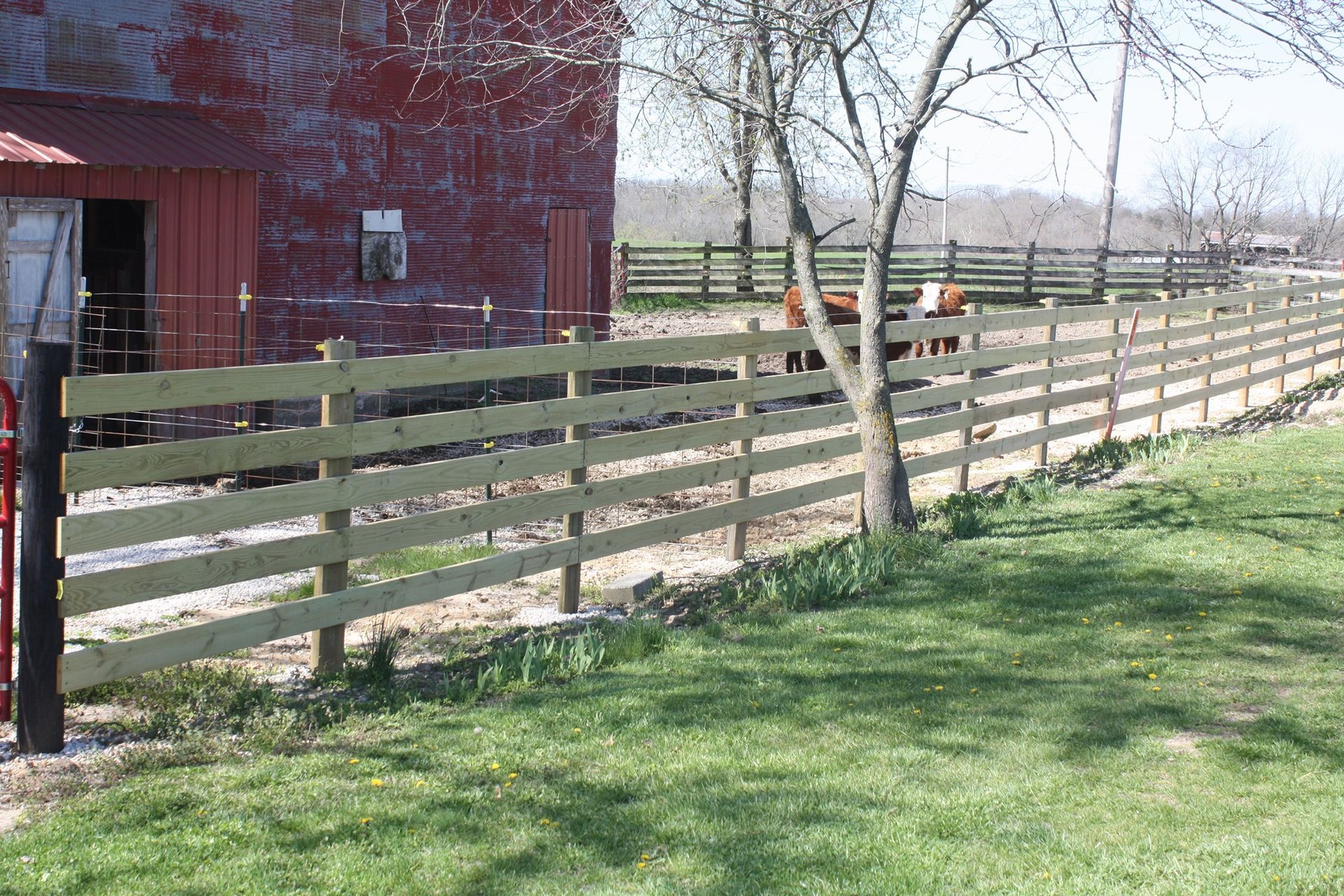
Pasture Management Through Controlled Movement
Livestock Grazing Systems in Perryville for farms and ranches managing grass productivity and herd rotation
Uncontrolled grazing leads to overused patches, underutilized sections, and inconsistent pasture recovery that reduces forage quality and stresses land resources over time. Mueller Fencing and Supplies installs livestock grazing systems using Gallagher products, which divide pastures into paddocks and allow controlled herd movement that optimizes grass growth, prevents overgrazing, and improves land productivity on agricultural properties in Perryville, Farmington, Cape Girardeau, and surrounding areas. This approach is essential for operations where pasture quality directly affects livestock health, supplemental feed costs, and long-term soil condition.
Grazing systems use temporary or permanent fencing to create paddock divisions, electric components to enforce boundaries, and gate or lane configurations that simplify moving livestock between sections. Gallagher energizers power the fencing, and portable posts or reels allow flexible paddock sizing based on herd count, grass height, and seasonal growth rates. The system integrates with existing farm infrastructure and can be expanded or reconfigured as grazing strategies evolve.
Discuss grazing system setup options to improve pasture utilization and reduce reliance on purchased feed during the growing season.
What Controlled Grazing Systems Actually Accomplish
Installation starts with evaluating pasture size, topography, water point locations, and typical herd movement to design paddock layouts that balance forage availability with rest periods for grass recovery. Gallagher energizers are positioned centrally to minimize voltage drop across fence lines, and conductors are strung at heights appropriate for the livestock type being managed. Temporary systems use step-in posts and polywire for seasonal flexibility, while permanent installations use treated wood posts and high-tensile wire for durability and long-term boundary definition.
Once the grazing system is functioning, you will notice livestock concentrate grazing pressure in designated paddocks, grass receives recovery time before being grazed again, and previously over-browsed areas regain density and vigor. Herd movement becomes routine and predictable, and the system reduces labor compared to manually driving livestock between unfenced pasture sections.
Grazing systems support adaptive management practices such as adjusting paddock size during drought, increasing rotation frequency when grass growth accelerates, or creating sacrifice areas that protect primary pastures during wet conditions. The infrastructure is built to withstand farm equipment traffic, livestock pressure, and seasonal weather exposure without frequent repair.
Farmers considering rotational grazing installations often ask about system configuration, power requirements, and practical operation before committing resources.
Questions Before Starting Your Project
How does paddock size affect grass recovery time?
Smaller paddocks concentrate grazing impact and require shorter occupation periods, typically one to three days, which allows grass to rest for three to four weeks before the next grazing cycle, promoting root development and preventing stem damage that slows regrowth.
What energizer capacity is needed for a multi-paddock grazing system in Perryville?
Energizer selection depends on total fence length and vegetation contact along the line, but most rotational systems require units capable of powering five to ten miles of fence with sufficient output to remain effective even when weeds or grass touch the wire and create minor current leakage.
Can grazing systems work on properties with irregular terrain or wooded sections?
Paddock layouts can be adapted to slopes, creek crossings, tree lines, and uneven ground by adjusting fence paths and using terrain features as natural boundaries, though rocky or heavily wooded areas may require additional labor for post installation.
What is the difference between temporary and permanent grazing fences?
Temporary systems use lightweight posts and polywire that can be moved to adjust paddock size or layout seasonally, while permanent fences use treated posts set in the ground with high-tensile wire that remains in place year-round for consistent boundary definition.
How quickly can livestock learn to respect electric fencing?
Most livestock recognize electric fencing within a few days of initial contact, especially when energizer output is sufficient to deliver a memorable correction, though training periods vary by animal temperament and prior exposure to electric systems.
Mueller Fencing and Supplies is an authorized Gallagher dealer and designs grazing systems based on your property layout, herd type, and pasture management goals. Reach out to review paddock configuration options and schedule installation for your farm or ranch.