
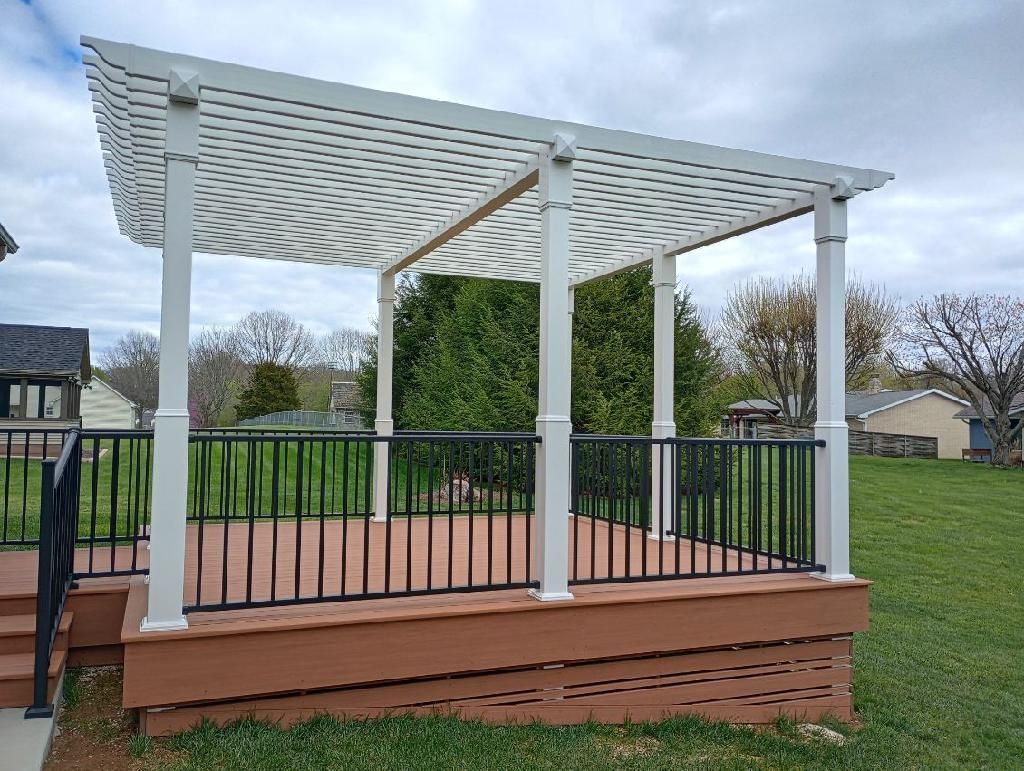
Outdoor Spaces Built for Daily Use
Deck Installation in Perryville for properties needing functional outdoor areas for entertainment and relaxation
A well-constructed deck changes how you use your yard by creating a stable, level surface that functions regardless of ground conditions or weather patterns common to Perryville, St. Genevieve, Chester, IL and surrounding areas. Mueller Fencing and Supplies builds custom decks designed around your property layout, backyard terrain, and how you plan to use the space for gatherings, dining, or private outdoor time. Whether your yard has a slope, limited square footage, or existing landscape features that affect placement, the deck structure is adapted to fit the specific conditions rather than forcing a standard design into incompatible space.
Deck construction involves setting footings below the frost line to prevent shifting, building a support frame with properly spaced joists, and securing decking boards with fasteners that resist loosening from seasonal temperature swings and moisture cycles. Material selection affects both appearance and maintenance requirements, with options including pressure-treated lumber for cost-effective durability and composite decking for reduced upkeep over time.
Start a deck project consultation to review yard conditions and discuss design options that match your outdoor living priorities.
How Deck Construction Addresses Terrain and Layout Challenges
The process starts with evaluating your yard's slope, drainage patterns, and proximity to the house to determine footing placement and deck height. Footings are dug and poured, the ledger board is anchored to the home structure if the deck attaches directly, and the frame is assembled with joists spaced to support live load without sagging or bounce. Decking boards are installed with slight gaps to allow water drainage and wood expansion, and railings are added at heights that meet code requirements for elevated platforms.
Once the deck is complete, you will notice a solid walking surface that does not shift or flex underfoot, a raised platform that stays dry even after rain, and defined outdoor space that expands usable living area beyond the interior footprint of your home. Railings provide secure edges, and stairs offer stable access between the deck and yard level.
Deck designs can incorporate built-in seating, planter boxes, or multi-level sections that separate lounging areas from dining zones. The structure is engineered to handle furniture weight, foot traffic, and seasonal load such as snow accumulation during winter months in the region.
Deck installation decisions often involve material selection, site preparation, and understanding what the completed structure will handle.
Answers to Frequent Service Questions
What material choice makes the most sense for a low-maintenance deck?
Composite decking resists fading, splintering, and moisture damage without requiring annual staining or sealing, though it carries a higher upfront cost compared to pressure-treated wood, which performs well with periodic maintenance and resealing every few years.
How does sloped terrain affect deck construction in Perryville?
Slopes require taller support posts on the low side of the yard to achieve a level deck surface, which increases material and labor compared to flat-grade installations, but the elevation gain often improves sightlines and creates usable space above otherwise uneven ground.
What size deck works for typical backyard entertaining?
Deck dimensions depend on planned use, but a 12x16-foot platform generally accommodates a dining table with seating for six, a grill station, and walkway space, while larger layouts support multiple activity zones such as cooking, dining, and lounge seating.
When is the best time to schedule deck installation?
Construction proceeds most efficiently during dry months when ground conditions allow efficient footing installation and concrete curing, though projects can be completed year-round with adjustments for weather delays and material handling in wet or frozen conditions.
Can a deck be built around existing trees or landscape features?
Deck framing can be designed with cutouts or openings that allow trees to grow through the surface, though spacing must account for trunk expansion over time, and root zones should remain undisturbed to avoid compromising tree health or deck stability.
Mueller Fencing and Supplies designs decks based on your property's specific conditions and how you plan to use outdoor space. Arrange a site visit to discuss material options, layout possibilities, and construction timelines for your project.